Research area

Underwater Acoustic Communication

Developing new ways to communicate beneath the surface

Research Overview

Exploring New Frontiers in Underwater Acoustic Communication

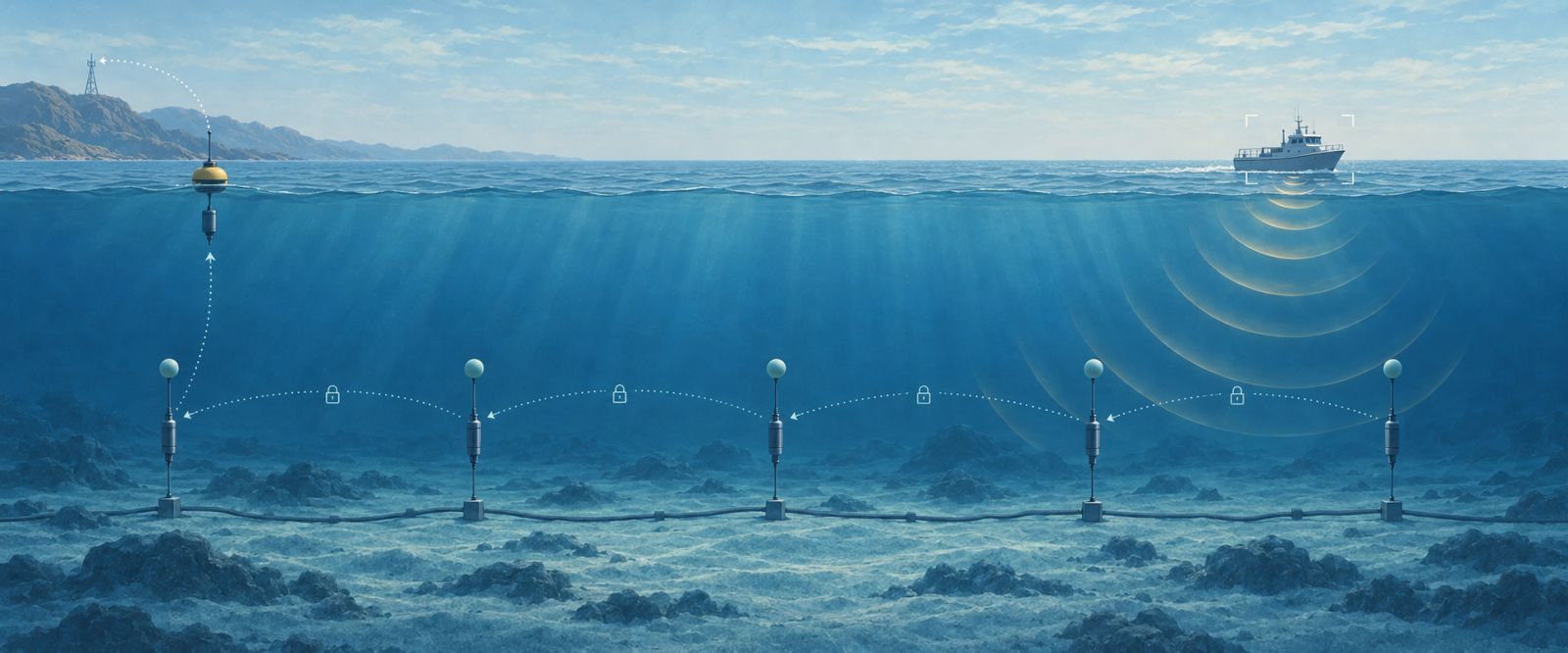
Underwater acoustic communication is constrained by limited bandwidth, long propagation delays, multipath propagation, Doppler effects, ambient noise, and rapidly changing channel conditions. Our research develops new acoustic waveforms and communication methods designed specifically for these challenging environments.

We combine communication theory, signal processing, nonlinear systems, bio-inspired design, and experimental validation to create underwater communication technologies that are reliable, energy-efficient, secure, and environmentally responsible.

Research Programme

Research workstreams

Distinct lines of enquiry, connected by one shared validation pathway.

Novel acoustic waveform design

We develop and evaluate new acoustic waveforms intended to improve communication performance in noisy, time-varying, and multipath underwater channels.

Our waveform research targets:

  • Improved resistance to interference and channel distortion
  • Reliable operation at low signal-to-noise ratios
  • Robustness to Doppler and mobility
  • Reduced synchronization requirements
  • Low-complexity signal detection
  • Enhanced physical-layer security
  • Efficient operation over long communication ranges
Chaos-based waveforms

We investigate chaos-based waveforms for robust and secure underwater communication. Chaotic signals offer wideband characteristics, low cross-correlation, and signal structures that are difficult to predict or reproduce without knowledge of the underlying parameters.

Our research includes chaotic sequence generation, spread-spectrum transmission, synchronization, modulation, receiver design, and physical-layer security. These techniques are evaluated for their ability to improve reliability, resistance to interference, and protection against unauthorized interception or imitation.

Biomimetic waveforms

Marine animals have evolved effective methods for producing and detecting sound in complex underwater environments. We investigate how selected characteristics of biological acoustic signals can inspire new communication waveforms.

Biomimetic waveform design may draw on principles observed in marine mammal vocalizations, fish sounds, echolocation signals, and other naturally occurring acoustic patterns. The objective is not simply to reproduce biological sounds, but to translate useful time-frequency, coding, and adaptation mechanisms into engineering solutions.

These waveforms may support:

  • Robust communication in noisy environments
  • Adaptive time-frequency signalling
  • Improved signal detection
  • Reduced probability of interception
  • Better coexistence with existing marine acoustic activity

Energy-efficient underwater communication

Underwater devices are commonly powered by batteries that are difficult and expensive to replace. We therefore develop communication techniques that reduce transmission time, processing requirements, retransmissions, and acoustic modem activity.

Our research includes:

  • Energy-aware waveform and packet design
  • Adaptive transmission power and data rate
  • Low-complexity signal processing
  • Event-triggered communication
  • Short and efficient signalling sequences
  • Sleep scheduling and selective modem activation

The goal is to extend deployment lifetime while maintaining reliable access to important sensor and control data.

Environmentally responsible communication

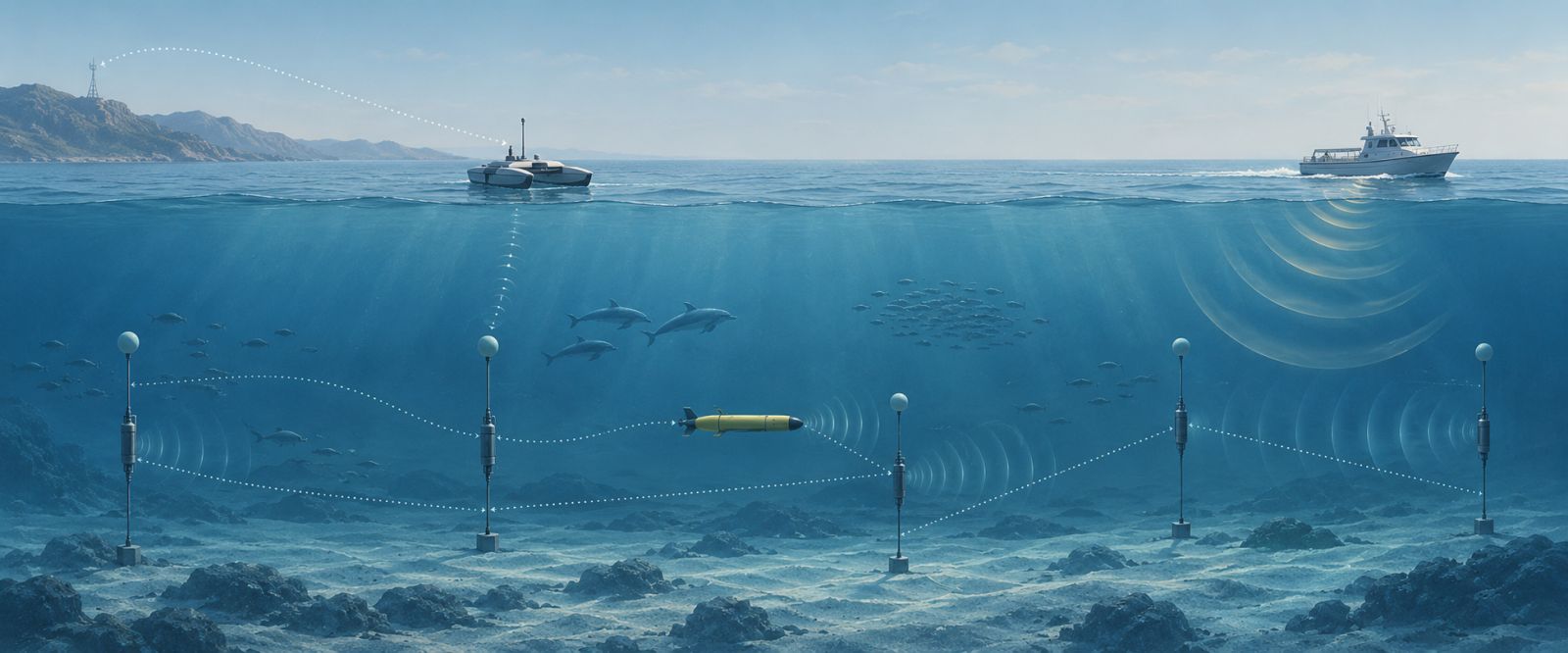
Acoustic communication introduces additional sound into the marine environment. We investigate communication methods that minimize unnecessary acoustic emissions while preserving link reliability.

This includes:

  • Low-power and short-duration transmissions
  • Adaptive selection of transmission frequency and timing
  • Event-driven rather than continuous communication
  • Waveforms with a reduced acoustic footprint
  • Intelligent scheduling based on ambient noise and marine activity
  • Avoidance of unnecessary retransmissions and channel occupation

Our objective is to provide reliable underwater connectivity while limiting potential disturbance to marine ecosystems.

Adaptive communication

No single waveform or communication configuration performs optimally in every underwater environment. We develop adaptive methods that modify communication parameters according to channel quality, ambient noise, mobility, available energy, and application requirements.

Adaptation may involve changes in waveform type, bandwidth, carrier frequency, modulation, coding, transmission power, packet duration, and retransmission strategy.

Our vision

Our goal is to develop underwater networks that can operate reliably over long distances, coordinate distributed sensing devices, adapt to changing marine conditions, and remain operational for extended periods with limited energy resources.

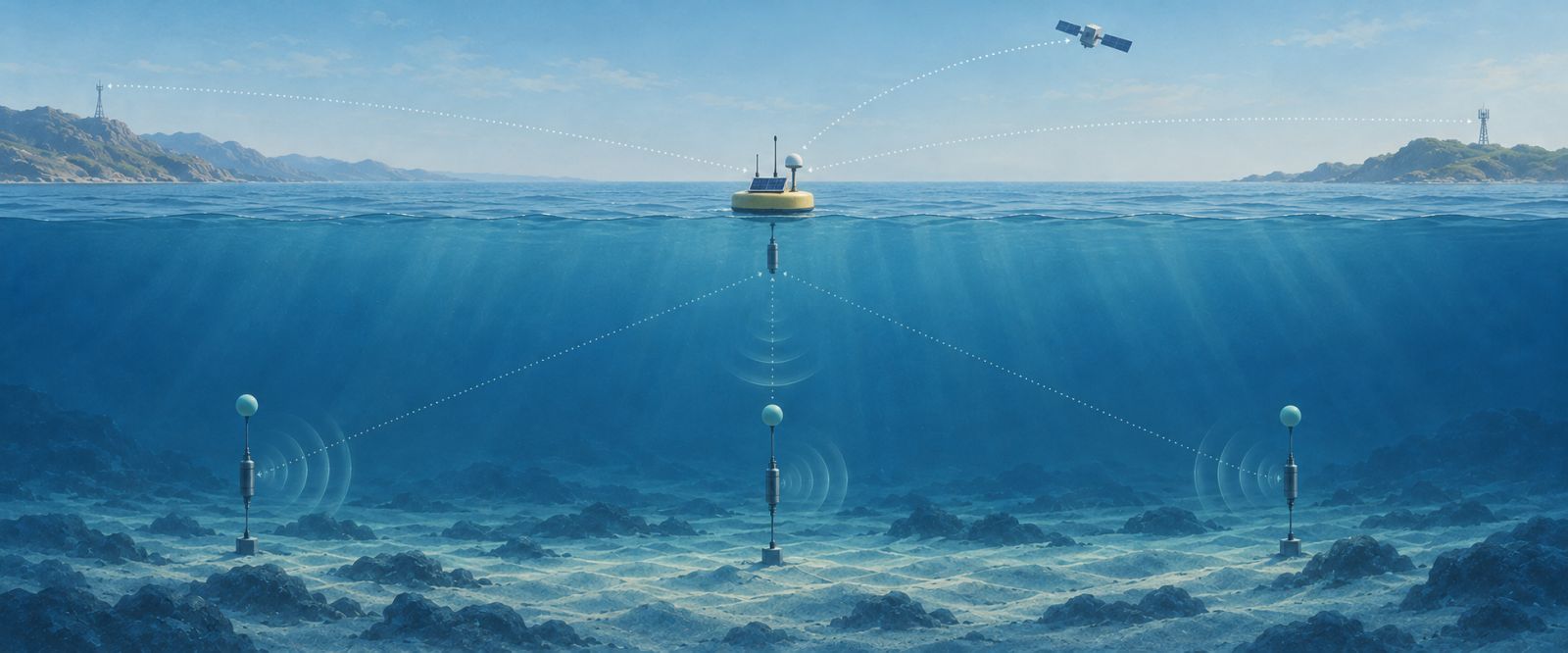
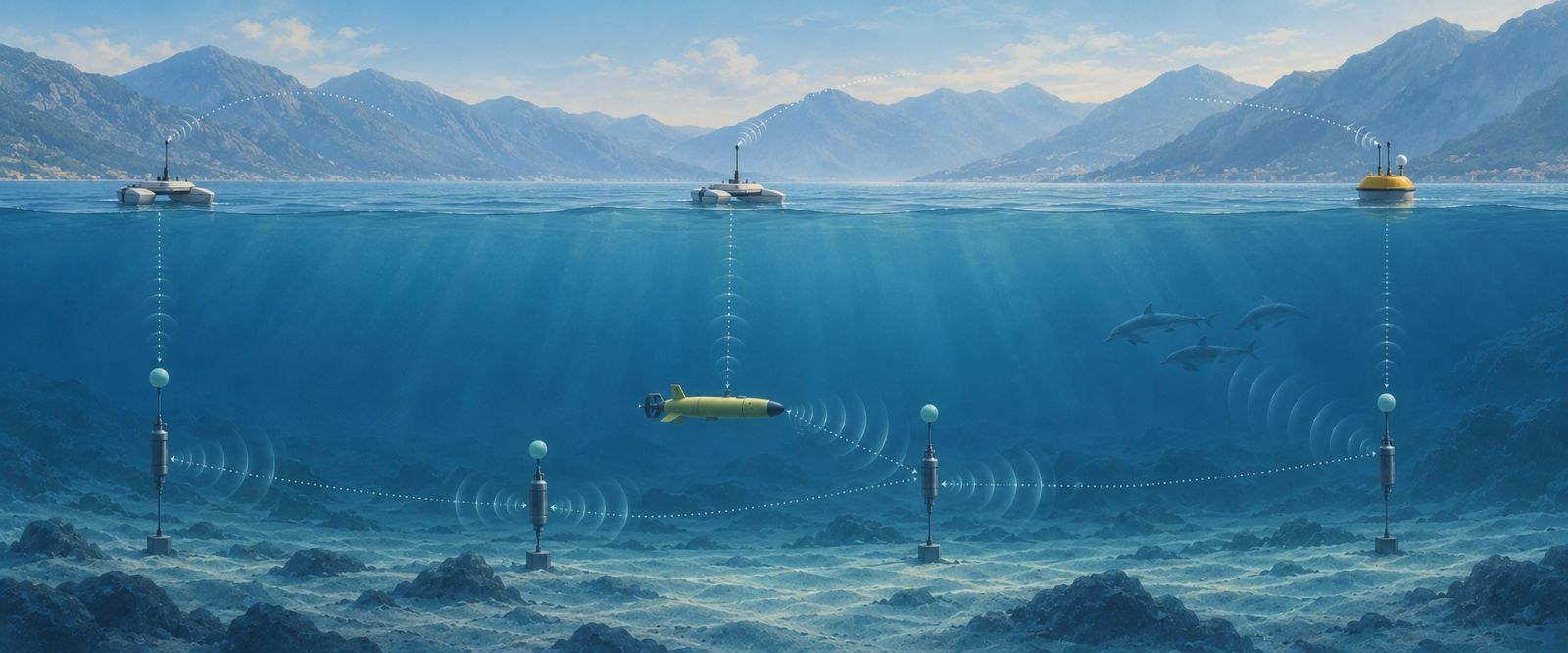
By combining communication protocols, distributed sensing, cooperative processing, autonomous platforms, and surface gateways, we aim to enable scalable underwater systems that transform isolated devices into intelligent and resilient marine networks.